 bahasa indonesia
SRIKANDI Innovation from FK UNS Strengthens Competencies of Surakarta Midwives in Early Detection of Women’s Cancers
 15/10/2026


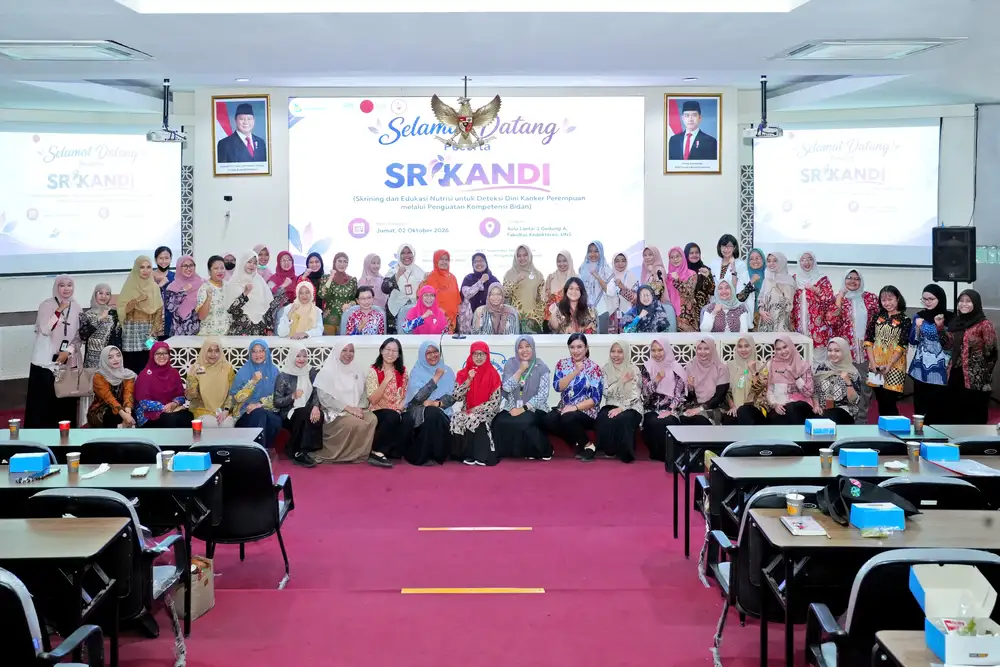
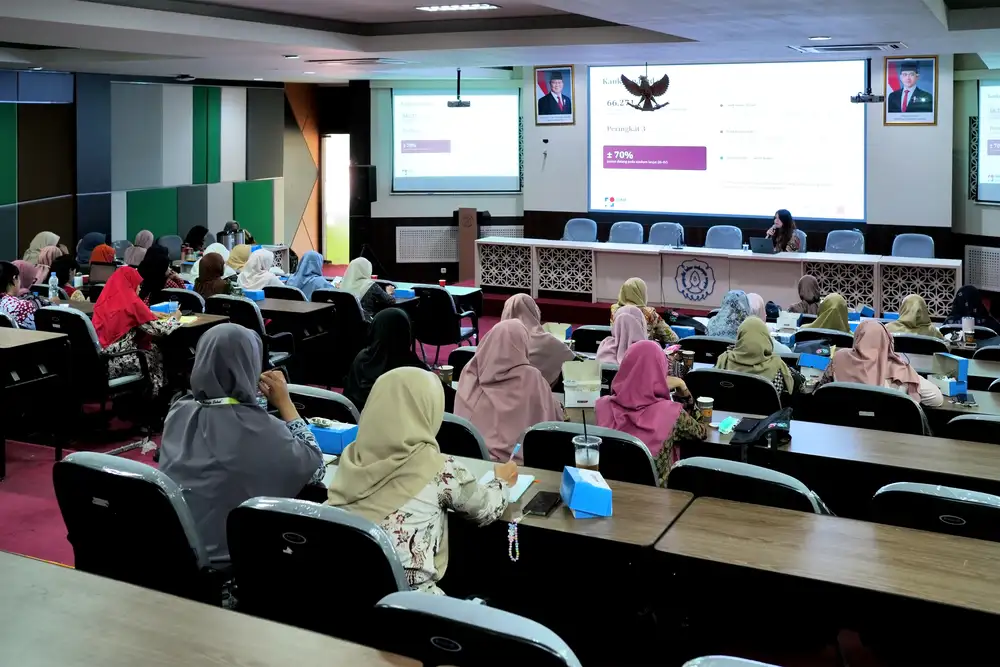
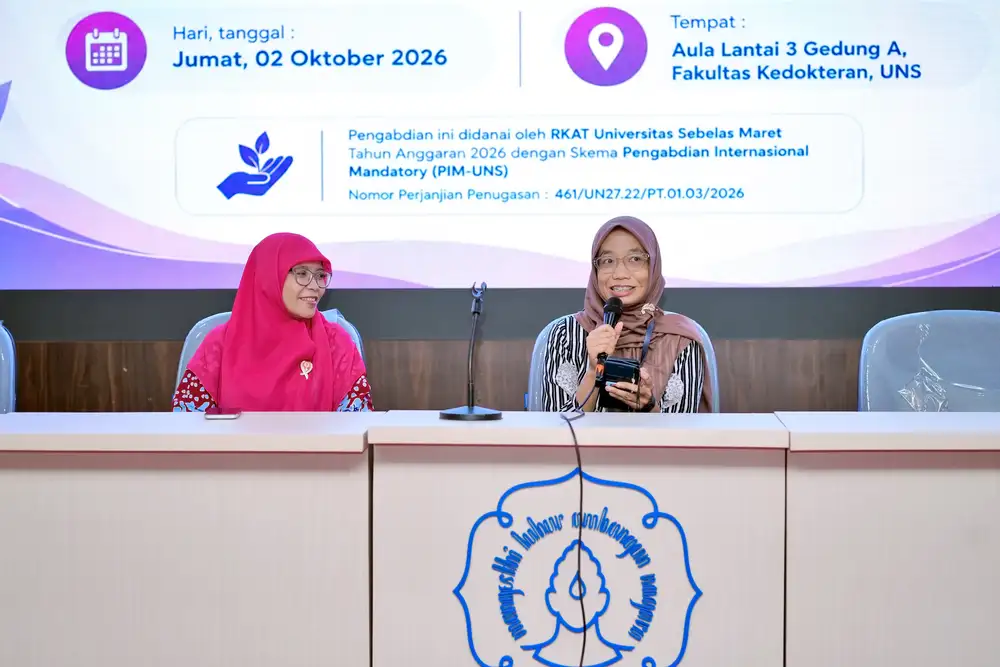
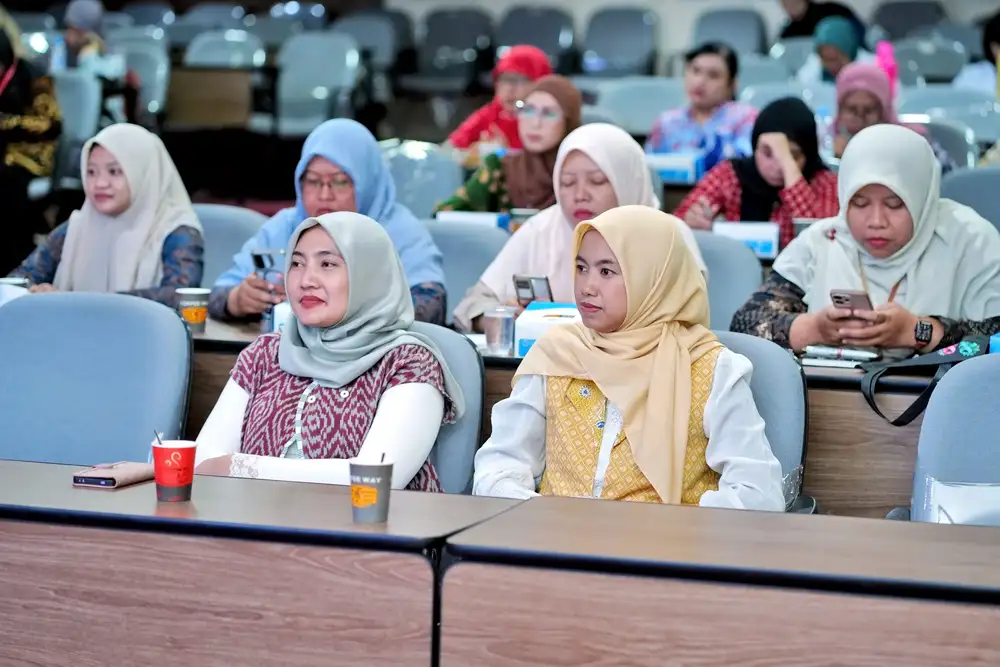
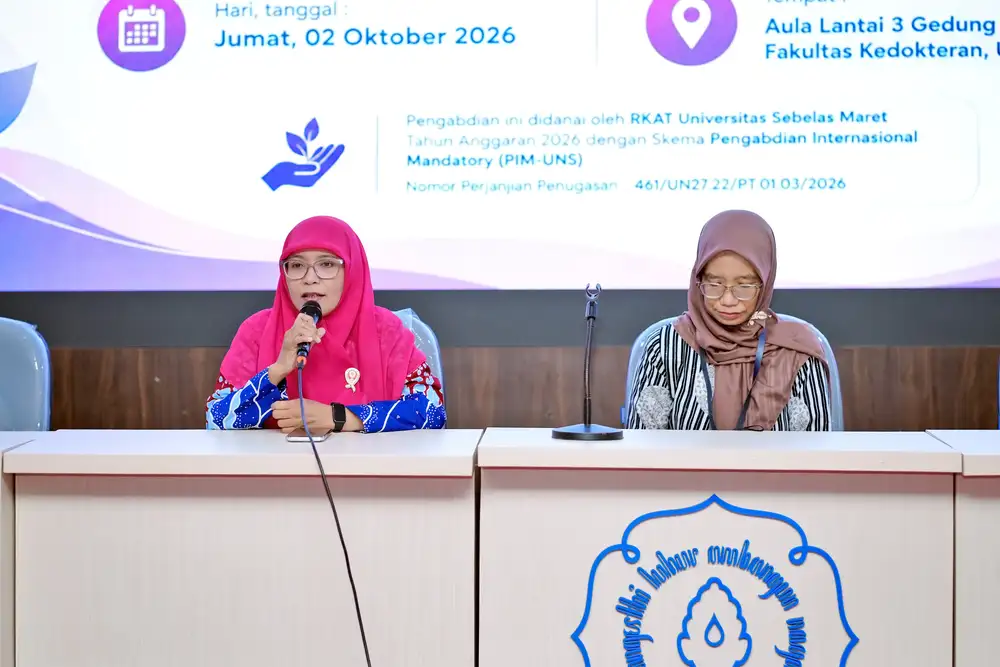
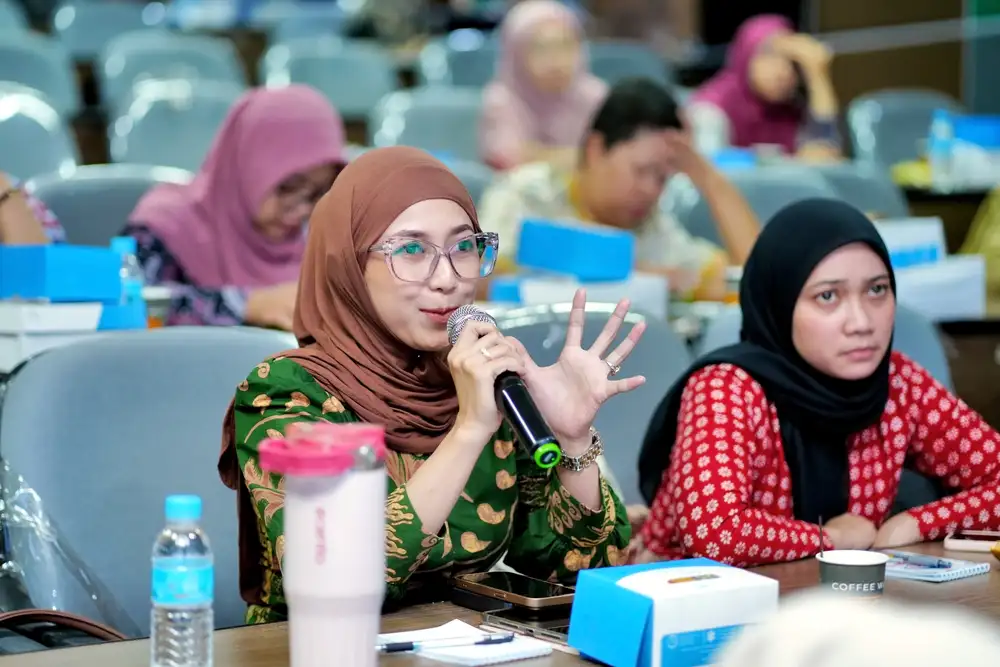
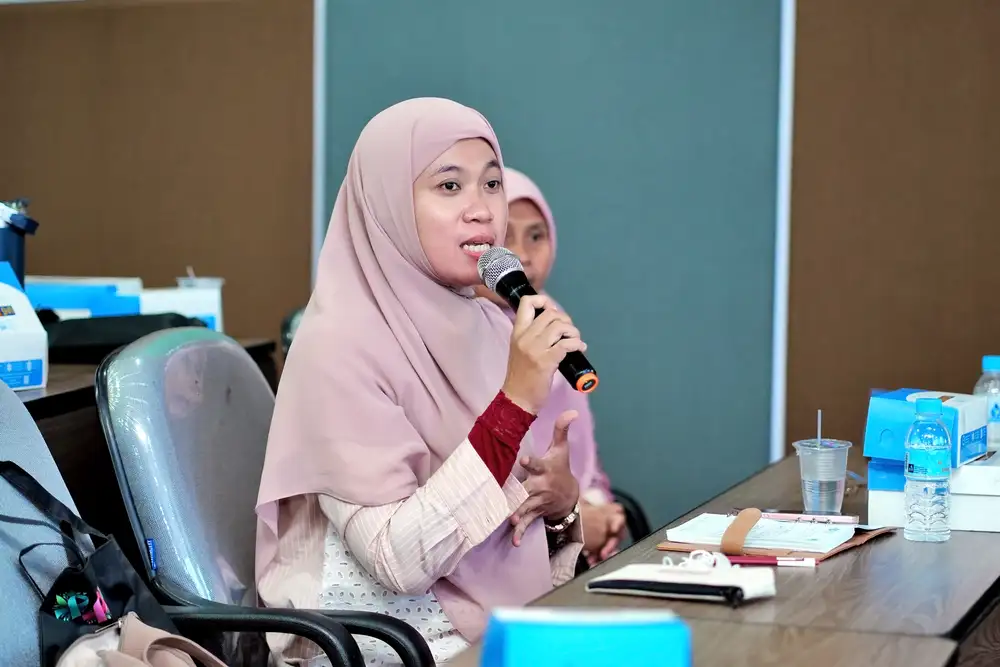
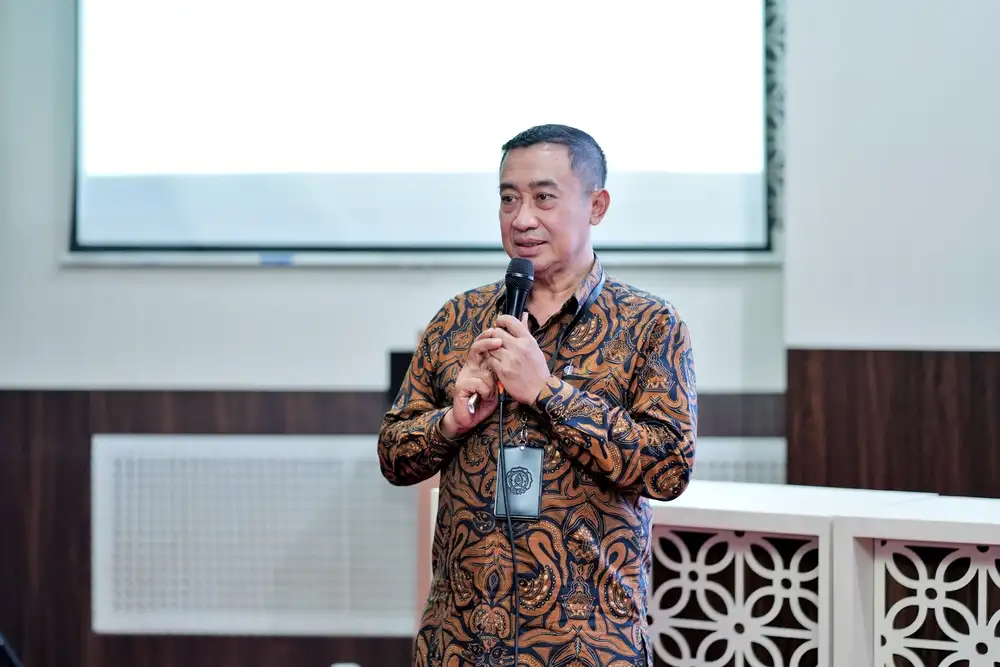
The Faculty of Medicine at Universitas Sebelas Maret (FK UNS), in collaboration with the Surakarta City branch of the Indonesian Midwives Association (IBI), is strengthening the capacity of midwives in the areas of education, screening, and health support for women through the SRIKANDI program (Screening and Nutritional Education for the Early Detection of Cancer in Women through the Enhancement of Midwife Competencies). The SRIKANDI workshop was held on October 2, 2026, and was attended by 50 midwives representing 17 community health centers (puskesmas), the "Bidan Delima" (a quality-certified midwife network), and various hospitals in Surakarta City.
This program is part of the Mandatory International Community Service (PIM-UNS) initiative, funded through the 2026 fiscal year budget of Universitas Sebelas Maret, under the Community Service Assignment Agreement number 461/UN27.22/PT.01.03/2026.
SRIKANDI is designed to bolster the role of midwives as healthcare professionals who work in close proximity to women and their communities. Beyond focusing on screening, the program integrates training in health communication, nutritional education, the identification of cancer risk factors and early warning signs, patient support, and the strengthening of referral mechanisms.
The program development process began with a needs assessment involving 20 midwives. The assessment results indicated that 95 percent of the participants held a highly positive attitude toward early cancer detection in women, and 90 percent demonstrated good competency; meanwhile, the need for further training remained in the 90–95 percent range.
These findings were reinforced through a Focus Group Discussion (FGD) involving representatives from the Surakarta City Health Office, the Indonesian Midwives Association (IBI) of Surakarta City, and practicing midwives. The discussion identified several priority needs, including strengthening midwives' communication skills, updating educational materials, and integrating nutrition education with efforts toward the early detection of cancer in women.
 |
 |
 |
(Swipe for the next photos)
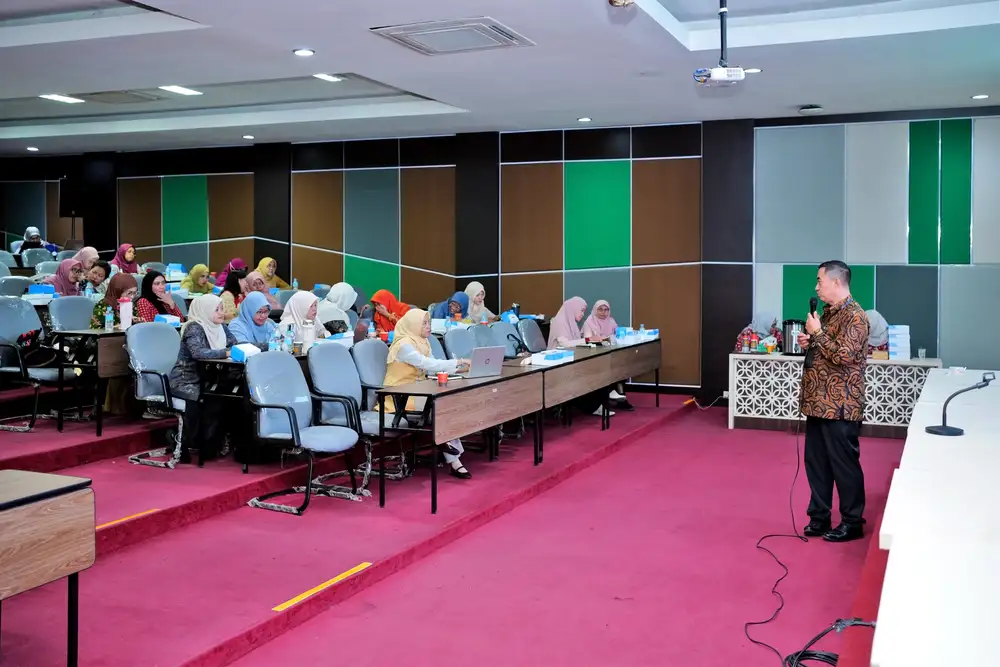
Based on these identified needs, the SRIKANDI workshop offers a learning experience closely aligned with clinical practice. The curriculum covers cancer epidemiology and women’s nutrition; myths and facts regarding nutrition, cervical cancer, and breast cancer; the early detection of breast cancer and precancerous cervical lesions; therapeutic communication; and strategies for nutrition education that can be applied in the provision of care for women.
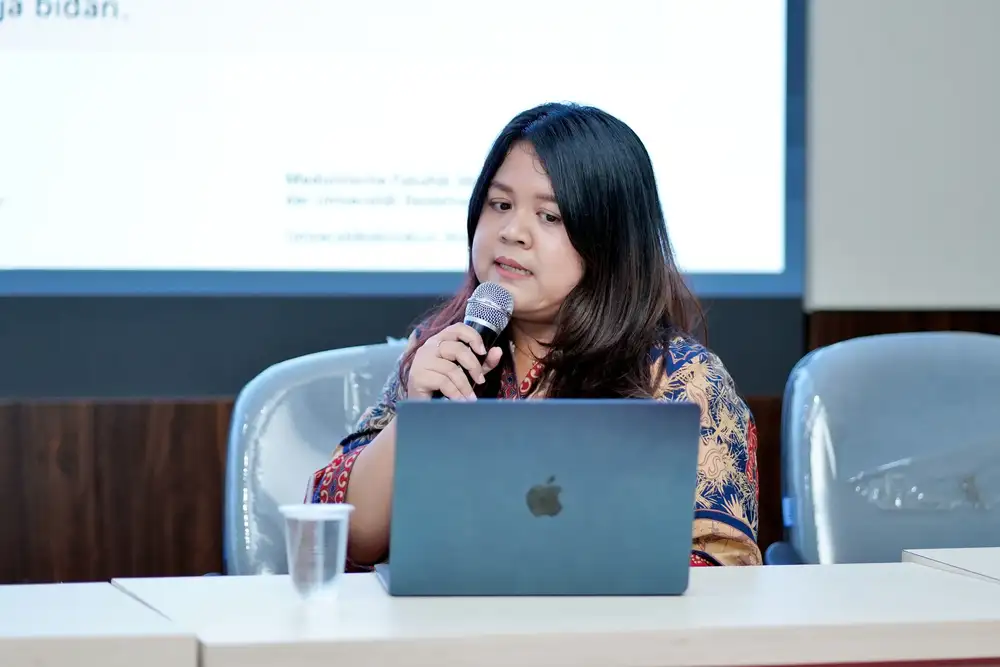
The Chair of PIM SRIKANDI, Dr. Vitri Widyaningsih, M.S., Ph.D.—a faculty member at the Faculty of Medicine, Universitas Sebelas Maret (UNS)—stated that the close relationship between midwives and women serves as a vital asset in the prevention and early detection of cancer.
“Midwives occupy a highly strategic position due to their proximity to women and the broader community. Through SRIKANDI, we aim to strengthen the capabilities of midwives—not only in screening, but also in communication, nutritional education, and ongoing support. This ensures that women receive accurate information and are encouraged to pursue early detection.”
The international dimension of this program is bolstered by a collaboration with Dr.sc.hum. Melani Ratih Mahanani, MD, MScIH, from Heidelberg University. This partnership provides an additional perspective on capacity building for healthcare professionals, ensuring that the knowledge imparted can be effectively applied in daily communication and clinical care.
 |
 |
 |
(Swipe for the next photos)
“Strengthening the capacity of midwives becomes truly meaningful when the material provided does not remain merely as theoretical knowledge, but is instead translated into practical communication and actionable steps within their professional practice,” Melani said.
Rofiatun Chasanah, S.ST., Bdn., Chair of the Surakarta City Branch of the Indonesian Midwives Association (IBI), welcomes the SRIKANDI program as a means to strengthen midwifery services at the community level.
"Midwives must possess not only knowledge but also the ability to deliver education effectively, communicate well, recognize signs and risk factors, and assist women in obtaining follow-up examinations when necessary. These are essential components of midwifery care," she stated.
Through a process encompassing needs assessment, the development of educational materials, training, implementation, and monitoring and evaluation, SRIKANDI is designed as a model for capacity building among midwives—one that supports the sustainability of women’s healthcare services within the community.
The program also contributes to the achievement of the Sustainable Development Goals (SDGs), specifically SDG 3 (Good Health and Well-being), SDG 4 (Quality Education), SDG 5 (Gender Equality), and SDG 17 (Partnerships for the Goals).
Ultimately, the early detection of cancer in women is not merely about identifying a disease as soon as possible. It also requires women to be knowledgeable, confident, and to have access to the right information and healthcare services. Through SRIKANDI, the Faculty of Medicine at Universitas Sebelas Maret (FK UNS) and its partners aim to strengthen this chain of care, starting from the point of contact closest to the women themselves.
As midwives’ capacities in knowledge, communication, and education grow stronger, women become better equipped to recognize risks, seek help earlier, and make informed decisions regarding their own health.
 |
 |
 |
(Swipe for the next photos)
Humas FK UNS